
Addressing truck subsidies in a fossil fuel crisis
To reduce our dependency on imported fuels, we need to shift more freight onto electric trains, while also reviving our electric passenger rail network. This requires more investment in rail than roads. Research by the Infrastructure Commission shows, when compared with peer nations, we under invest in rail but over invest in roads. One policy that would help level out the playing field is charging trucks the full cost of damage to roads.
REDUCING OIL DEPENDENCYPOLICYRESILIENCECLIMATE CHANGEFREIGHTREGIONAL RAILINFRASTRUCTURETHE FUTUREINVESTMENT
The Future is Rail
4/4/20264 min read
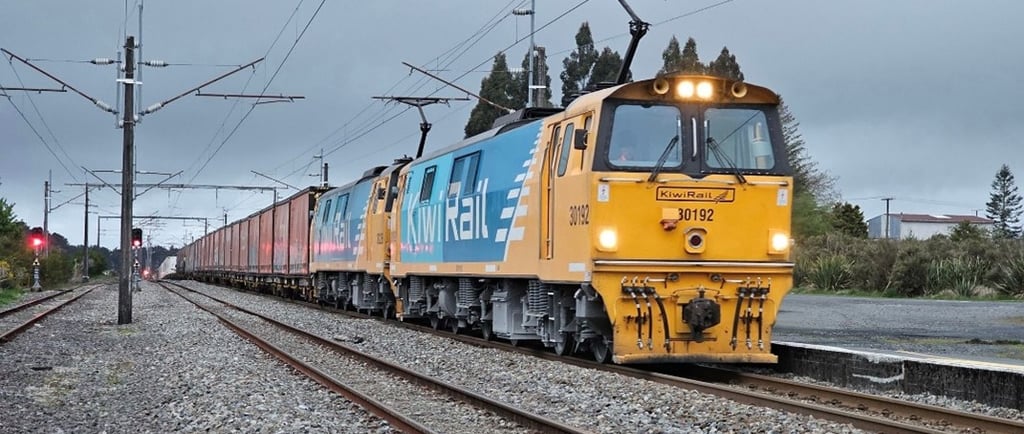
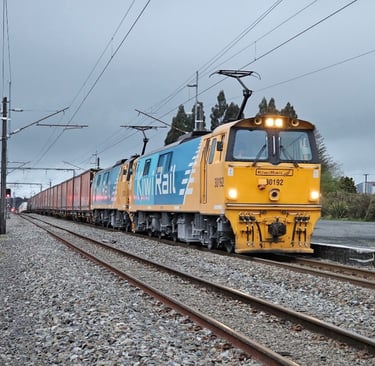
The conflict in the Middle East has brought home to many Kiwis just how vulnerable we are to shortages of imported fuel. Unfortunately, decisions made over many decades have increased this dependency rather than reduced it. A recent article published in The Conversation, highlighted how and why New Zealand’s oil consumption was at a 5-year high. The article notes that oil is the primary contributor towards increasing fossil fuel emissions, and that 80% of oil goes into air and land transport. An oil transition plan really means a transport plan.
This current fuel crisis gives us an opportunity to re-calibrate New Zealand’s freight logistics industry quickly and at scale.
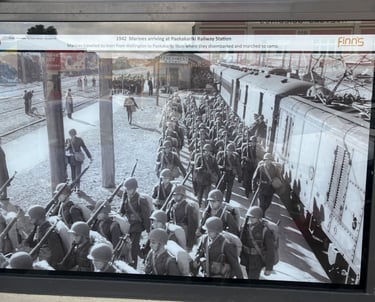
History shows we knew of some of the solutions many years ago. On an outside window of the hotel at Paekakariki is this photo. It shows when American troops were stationed near the village in 1942. They came out from Wellington by train. As the photo shows, that train was pulled by an electric locomotive.

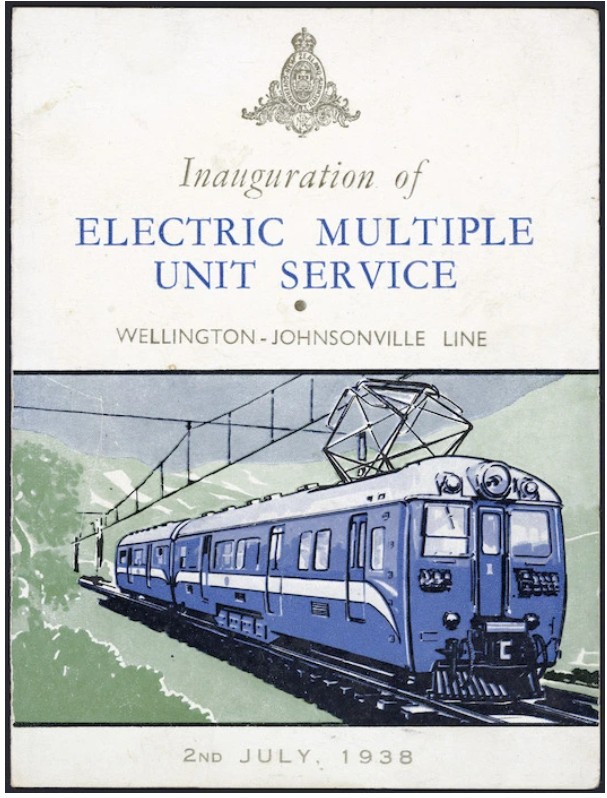
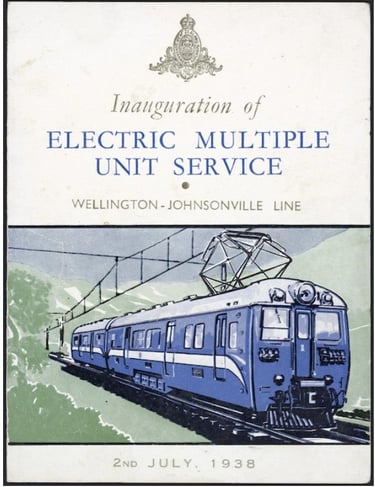
The benefits of rail are clear in terms of its energy efficiency and its very low emissions. This is true even if diesel is being used to power the locomotive. But it is so much better if the train is powered by home grown renewable electricity. It is why trains on the Wellington metro network have been running on electricity since 1938.
We have explored the benefits of electrified rail in previous blogs.While we have extended electrification of our Auckland and Wellington metro lines relatively recently, the only major project to electrify our other lines goes back to the 1980s. This was when New Zealand faced its previous energy crisis and electrification of the central part of the Main Trunk Line between Hamilton and Palmerston North. Anyone familiar with the trip up from Taihape to Waiouru will recognise this loop.
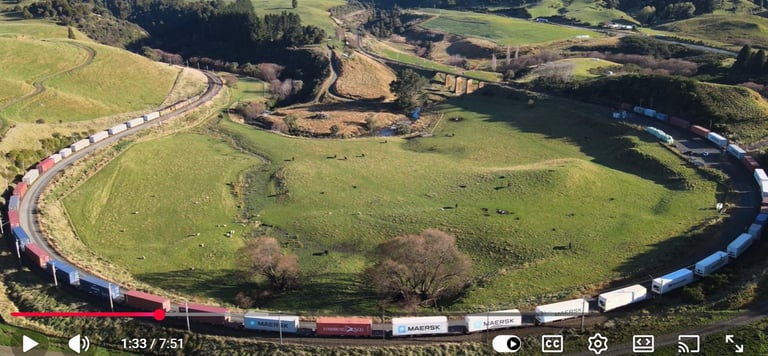
A freight train pulled by electric locomotives. Source: KiwiRail Spotter https://www.youtube.com/watch?v=D3G6J4pvDeY
This advance in electrification of our network was nearly undone in 2016 when KiwiRail proposed reverting back to diesel powered locomotives and no longer maintaining the overhead wires. Through lobbying by the public this decision was overturned. An example of the public having better insight than those developing rail policy.
Only about 13% of New Zealand’s rail network is electrified. At the other end of the spectrum is Switzerland with 100%. But even electrifying the busiest sections of the network will have a major impact. Just over half of Finland’s rail network is electrified. But electricity provides 80% of the energy required to move trains as against 20% for oil-based energy.
Electrification used to mean building overhead wires. But now battery powered trains allow electricity to be used on more of the network.
So how do we shift more freight onto electric trains, while also reviving our electric passenger rail network? At the simplest level, it requires more investment in rail than roads. Research by the Infrastructure Commission shows, when compared with peer nations, we under invest in rail but over invest in roads. There are many reasons why this occurs. But one policy that would help level out the playing field is charging trucks the full cost of damage to roads.
The $1.4 billion annual subsidy for heavy vehicles
The Future is Rail has established numerical evidence of the scale of subsidy received by heavy trucks competing with rail, significantly undermining the competitive pricing position of rail. If this uneven playing field can be recognised and re-calibrated, then the rail investment can follow to enable electrification of a significant part of the freight logistics industry.
The Future is Rail investigated subsidies for heavy vehicles in early 2024, in response to the draft Government Policy Statement (GPS) for Transport. Our report on subsidies granted to heavy trucks noted that the introduction of HPMVs (High Productivity Motor Vehicles), from 2010 generated a “bow wave” of road maintenance, that has never been caught up. The report found that excluding social and environmental costs, the annual subsidy was projected to be around $1.4 billion dollars per year by 2027.
In our latest report we further explore these subsidies. We finish by a set of recommendations that would support an expansion of rail freight.
1. Adjust Road User Charges (RUCs) to correctly account for road maintenance costs incurred, as a consequence of heavy vehicle (HV) use. We estimate that the recommended RUC rates for HVs will need to roughly double to sustainably support the expenditure envisaged in the 2024 -2027 Government Policy Statement (GPS).
2. Increase ACC levies and introduce NOx emissions charges for HVs, to more fairly address social costs due to a greater severity of accidents, and pollution emissions. Harmful vehicle emissions are known to cause premature deaths, asthma in children, and increased hospitalisations.
3. If these increases in charges are untenable, then to ensure an even playing field, rail and marine freight should be subsidized at the same or greater rate as road freight.
4. Additional to point 3, around 50% of road common costs are subsidized by local and central government. Ensure that rail and marine freight is similarly subsidised. Assign the funding to electrify the core rail network and enable greater use of the existing nationwide regional rail network. This is aligned with a key recommendation of Te Waihanga New Zealand Infrastructure Commission, to optimise the use of existing infrastructure.
Some see a shift to electric trucks as the answer. That is part of the answer, when rail is not practical or for final delivery off transport hubs. But they too need to pay the full cost of damage to roads.
We hope the current fuel crisis will be resolved soon. But for many other reasons, we need to quickly reduce our dependency on imported oil. The Future is (electrified) Rail.