Aussie case studies show Te Huia how to grow
Australia is investing in passenger rail. We can learn from the experiences of Queensland and Western Australia.
WAIKATOPOLICYAUSTRALIAPUBLIC TRANSPORTREGIONAL RAILINVESTMENT
The Future is Rail
1/23/20263 min read
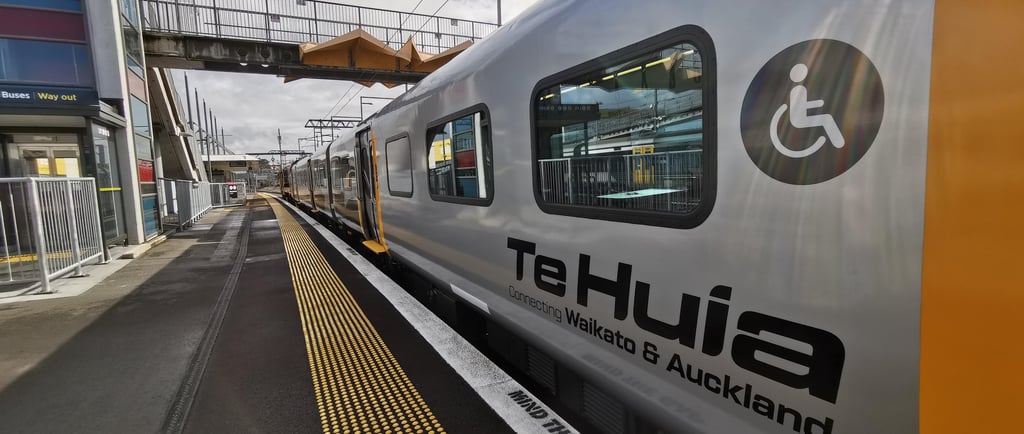
Te Huia, Waikato’s train service, connecting Hamilton and Auckland, is again under threat with its trial service coming to an end. There is a possibility, that like the bird, it too will become extinct. This would be a big mistake.
The Future is Rail supports the Waikato Regional Council’s current efforts to both retain and improve the service. We hope in the not-too-distant future that Te Huia will not only link Auckland and Hamilton but connect through to Tauranga.
Australia provides a useful comparison. Unlike Aotearoa New Zealand, in Australia there has been a major investment in passenger rail.
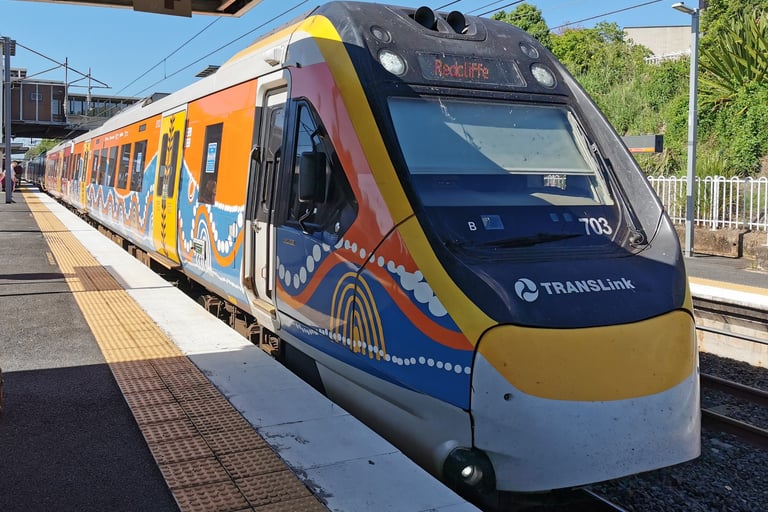
In Southeast Queensland (SEQ), using the same narrow-gauge track as New Zealand, hundreds of electric passenger rail trains criss-cross the region each day, with urban trains operating at speeds of up to 140kph and longer distance tilting trains up to 160kph. At about the same that the Muldoon government cancelled “Robbie’s Rapid Rail”, Brisbane committed to electrify and grow their commuter rail network. On a population comparison; at that time Auckland was home to 750,000, while Brisbane was home to 1,100,000.
The SEQ rail network is a core component of the regional transportation network covering some 262km in distance from the northern most to southern most points, across 12 lines, with 1,100 services per day. 53.04 million passengers were carried in FY 24/25, an increase of 13.6%, relative to FY 23/24. The correlation of SEQ rail passenger network growth with SEQ’s economic and population growth, and the delta of the economic prospects between SEQ and New Zealand’s so-called Golden Triangle, is outlined in a little more detail here.
It should be noted that transit oriented private sector property development is a key feature of the SEQ landscape. Queensland is home to around 208,000 kiwis, including a significant population of 65,000 identifying as Māori.
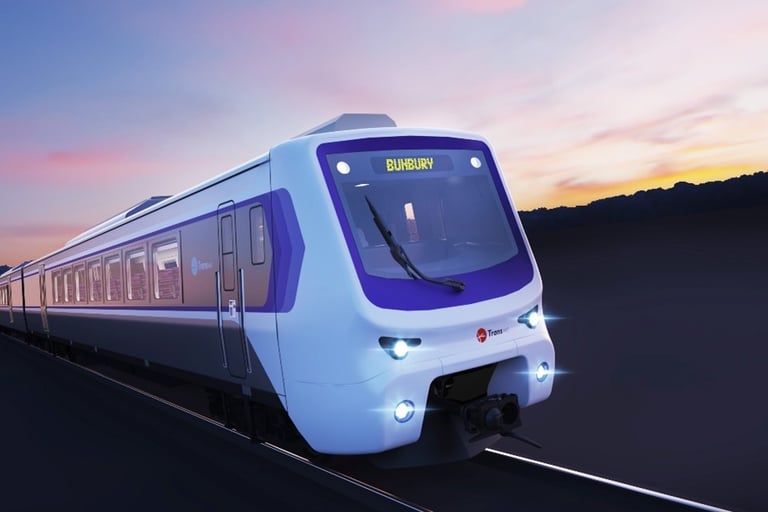
Caption: Artists’ impression of the new West Australia regional narrow-gauge trainset. With an operating speed of 130kph, it has a very similar capacity to a Te Huia train-set including seating for 146, with two wheelchair locations expandable to six, an on-board café, space for up to eight bikes, and innovative boarding ramps that address regional station platform-to-train interfaces (image c/o PTA West Australia).
In Australia there is also a federal government backed High Speed Rail Authority. This is planning a high-speed rail network to connect Brisbane, Sydney, Canberra, Melbourne and regional communities across the east coast of Australia. The first stage would connect Newcastle to Sydney in about one hour on a new dedicated high-speed railway. Establishing high speed rail in Australia has faced many challenges in the past but the current initiative seems to be on a more sustainable footing.
In Aotearoa New Zealand Te Huia, which carried 86,377 passengers in 2024 using 1970s era former British Rail carriages, is a very modest start to the revival of passenger rail in the Golden Triangle and beyond.
We explore these issues in more detail in our report Preventing another Te Huia extinction.
Over in West Australia, and on a scale perhaps more equivalent to contemporary New Zealand regional passenger rail, train-builder Alstom is in the final stages of testing and commissioning a new fleet of ‘Australind’ diesel railcars for operation between Perth and regional centre, Bunbury. With a population of 83,000, Bunbury is 167km distant from Perth, the rail journey involves a 2.5-hour journey time, and the previous trains carried 77,000 riders annually in the year to June 2023. The vehicles are also built for narrow gauge, but unlike New Zealand, there was never any doubt that new trains would be ordered to replace the previous fleet which dated from the 1980s. The new fleet is expected to enter service this year, with an increase in journey frequency from two trains a day to five each day.