Making better use of trains: Temporary platforms
The global fuel crisis has prompted some governments to explore a range of policies that encourage train use. To expand access to trains, temporary platforms can be built quickly and relatively cheaply.
WAIKATOPOLICYPUBLIC TRANSPORTBAY OF PLENTYREDUCING OIL DEPENDENCYREGIONAL RAILACCESSINFRASTRUCTUREINVESTMENT
Paul Callister
5/6/20265 min read
The global fuel crisis has prompted some governments to explore a range of policies that encourage train use. The fossil fuel savings are especially strong if most, if not all, of the rail network is electrified.
Reduced fares have been used in some places. But there remains debate as to how effective this is. Cheap, or free fares, are of little use if public transport is unreliable, infrequent or not easy to access.
In Aotearoa New Zealand, for those few longer distance trains that operate, are there areas of housing, or perhaps a special feature such as a Great Ride, that could justify an additional stop? We think so.
Te Huia is an example where additional stops would make the service available to more people. In a blog, Darren Davis notes:
“A business case wrapped up in August 2023 into additional station stops for Te Huia in the Upper North Waikato at Te Kauwhata, Pōkeno and Tūākau. These station stops are all closer to Auckland than any of the current Te Huia station stops. In particular, Pōkeno has grown very strongly, with a larger number of people who commute to work in Auckland, while significant growth is planned for Te Kauwhata and more modest growth in Tūākau.”
Darren provides a photo illustrating how unwelcoming Te Kauwhata is to potential rail travellers.
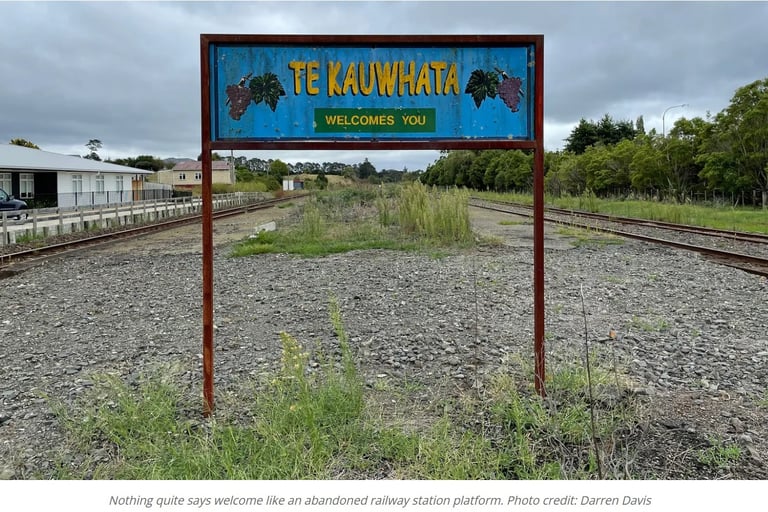
In the longer term, good quality permanent stations should be built along the Auckland to Hamilton train line. Along with this, any major expansion of housing should be clustered around obvious transit hubs. But, in the short term, temporary platforms can be built.
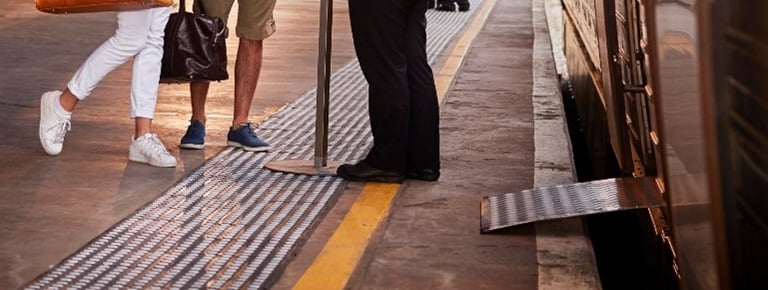
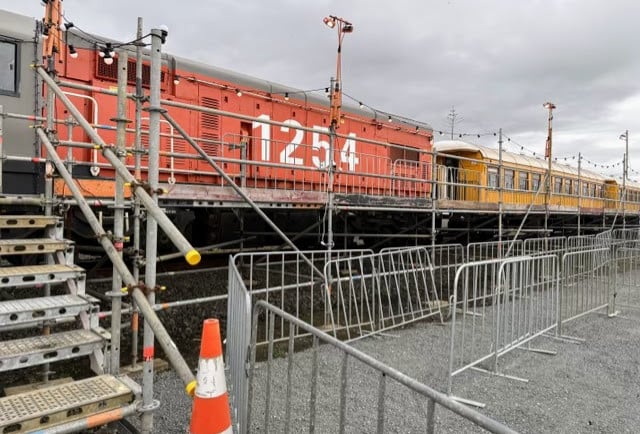
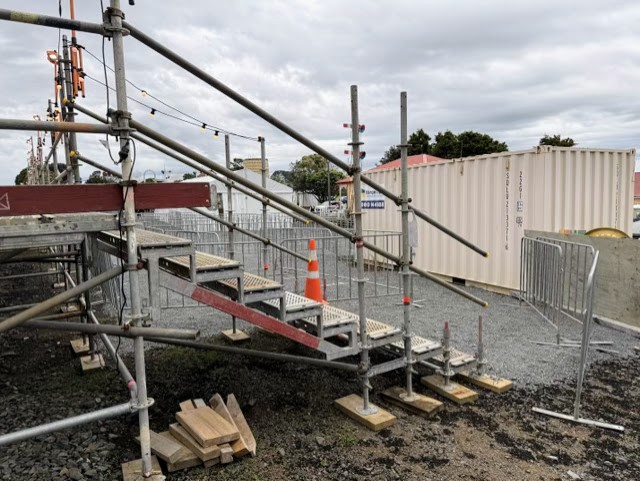
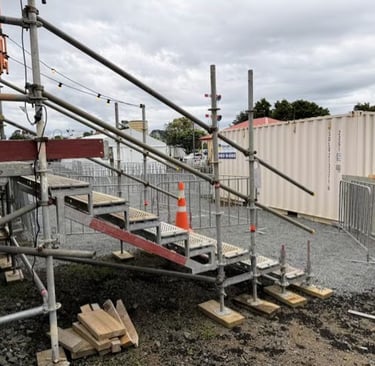
There are plenty of designs of temporary platforms. Here are examples from Glenbrook Vintage Railways. Source of photos Phil King.
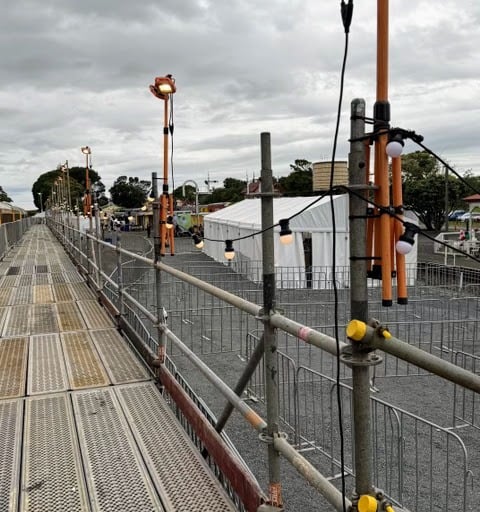
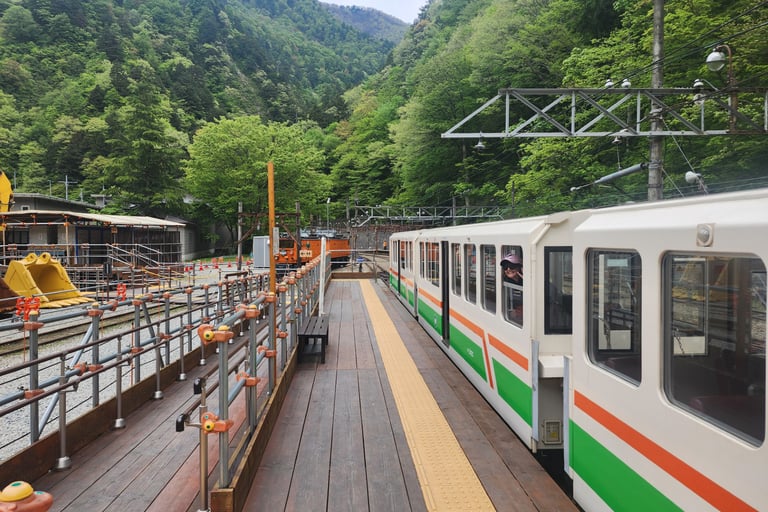
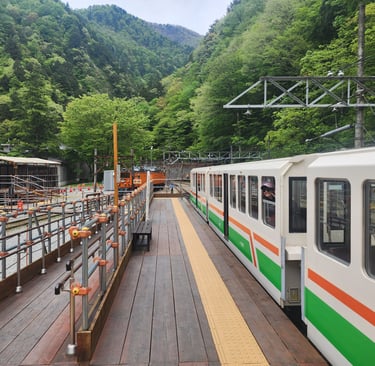
And here are some from Japan, courtesy of James L Llewellyn.
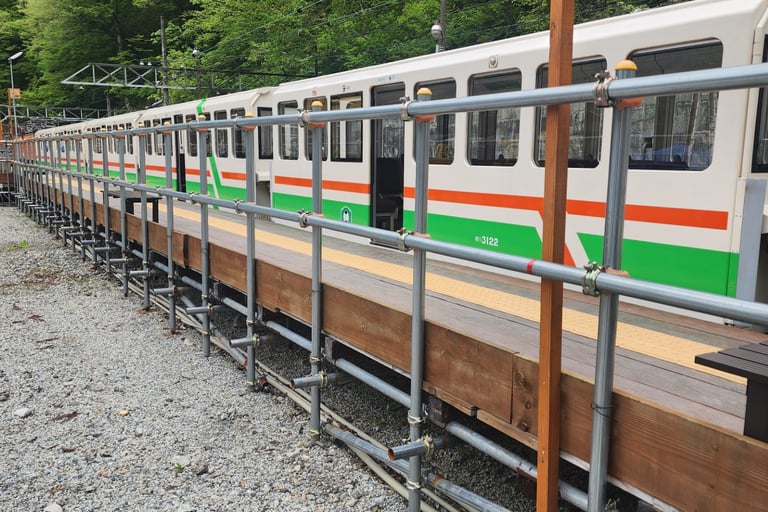
Temporary platforms can be used for special event trains. Before the opening of Te Kaha stadium in Christchurch, Ashburton Mayor Liz McMillan had been in contact with Mainland Rail about bringing the event trains to Ashburton.
"A platform would be good, but it's not essential," McMillan said.
She went onto say.
“If the KiwiRail platform, the concrete platform of the former train station, option doesn't pan out, it can be solved with Mainland Rail's mobile boarding ramp”.
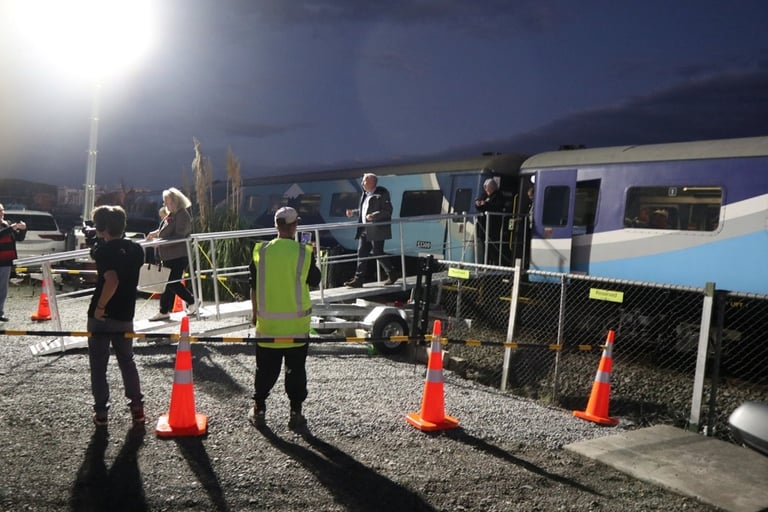
Which is what happened when the Mainland Rail train, using former Capital Connection carriages, brought rugby fans to the stadium. The below photo is courtesy of Patrick Dunford.
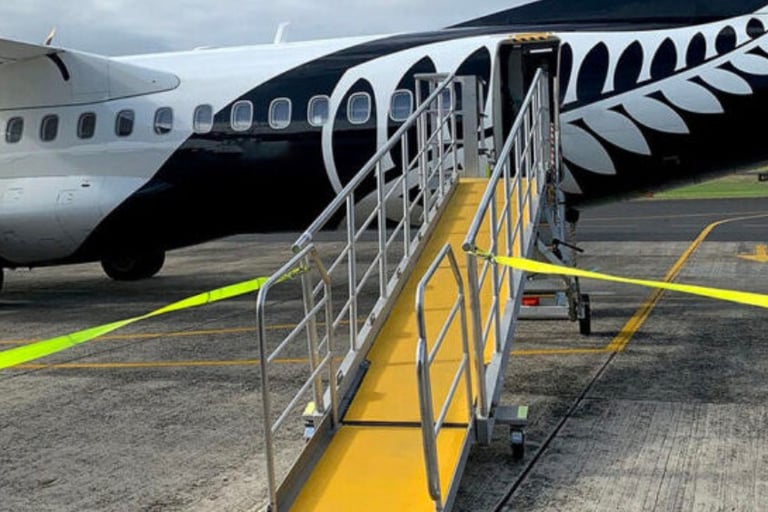
Air New Zealand may have perhaps, provided inspiration for Mainland Rail’s mobile boarding ramp. This type of boarding ramp is used at regional airports around the country. The ramps are locally built by Mount Maunganui manufacturer; FRP Limited (https://frp.co.nz/). The image below is from their website.
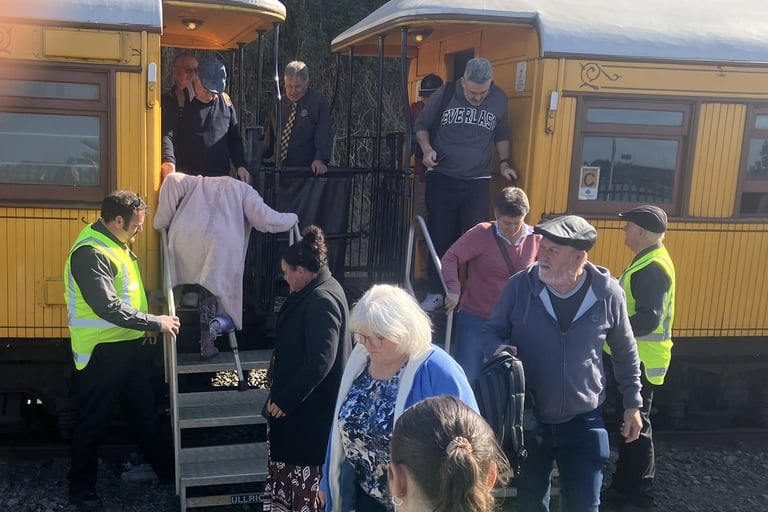
On the recent Glenbrook Vintage Railway excursion to Tauranga, there were simply portable steps provided down to the rail track. These proved to be more than adequate for unloading and loading an estimated 300 passengers.
There are many places where a temporary platform could be used. As an example, the usual starting and end point of the Timber Trail is Ongarue. Currently, rider park their cars there and they and their bikes are taken by shuttle van to the start of the track. Yet, Ongarue could offer much more, as it has an abandoned station on the main line between Auckland and Wellington. This could be a temporary platform stop for a Connector train, even if it only stops when there is demand.
In Wellington, there could be a temporary platform built at the entrance to Queen Elizabeth Park to be used by walkers and bikers on weekends. This would also require trains to have greater capacity to carry bikes.
Temporary platforms can be built quickly and relatively cheaply. They should be a tool used to create better access to trains.
This strategy can also be used for more permanent fixed boarding ramps.
Rotokauri Station at “The Base” north of Hamilton, cost an estimated $30 million at 2021 prices, while even the modest platform surface upgrade, and basic shelter at Huntly Station cost close to $2 million. Since then, it has been estimated that new stations at Tuakau, Pokeno, Te Kauwhata and Ngaruawahia to a basic construction level will cost at least $10 to $15 million each.
If aiming to try and rejuvenate an entire regional rail corridor with perhaps a dozed station platforms needing investment, it is worth looking overseas to regional passenger trains in West Australia, for another type of strategy. As in New Zealand, traditional “settler style” with low platforms were built across the state to serve the country network.
When rail lines were upgraded, the new trains had high floor boarding, with a floor level generally around 1200mm or more from rail height. Rather than completely remove the old stations, and heighten the entire platform, strategically placed, fixed concrete fixed boarding ramps were installed. Please refer to below image of the Perth – Kalgoorlie Prospector trains crossing paths. To the left, passengers can be seen on the fixed concrete boarding ramp, with final boarding via a lightweight portable onboard ramp.
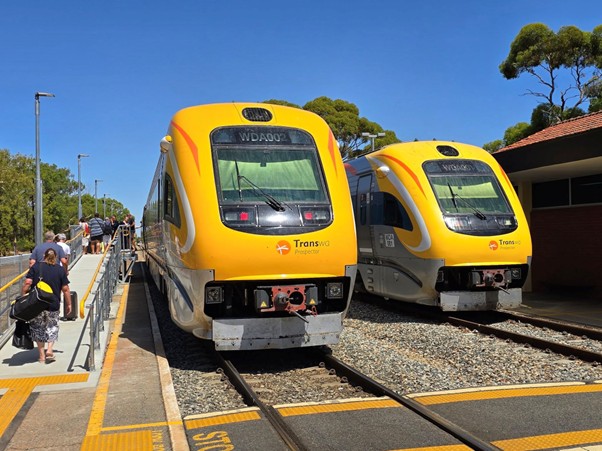
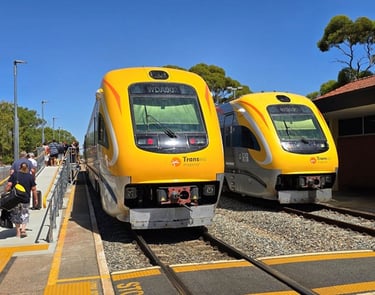
Due to different track gauges, and differing standards for rolling stock width, West Australia, also use lightweight portable onboard ramps, to bridge what can be a gap of up to 550mm between train and platform, and up to 160mm, vertically. Two or three car diesel multiple units, usually carry two onboard portable ramps; a standard ramp at around 800x800mm, and a wheel chair accessible ramp that around 850x1500mm, ensuring a compliant gradient for wheelchair users.