Te Huia: road subsidies context
Against the sorts of numbers talked about for new roading projects, funding for the Te Huia trial to continue, and funding for future improvements in brand new rolling stock and infrastructure, looks like an absolute bargain.
POLICYWAIKATOPUBLIC TRANSPORTFINANCEREGIONAL RAILINFRASTRUCTUREINVESTMENT
The Future is Rail
2/3/20262 min read
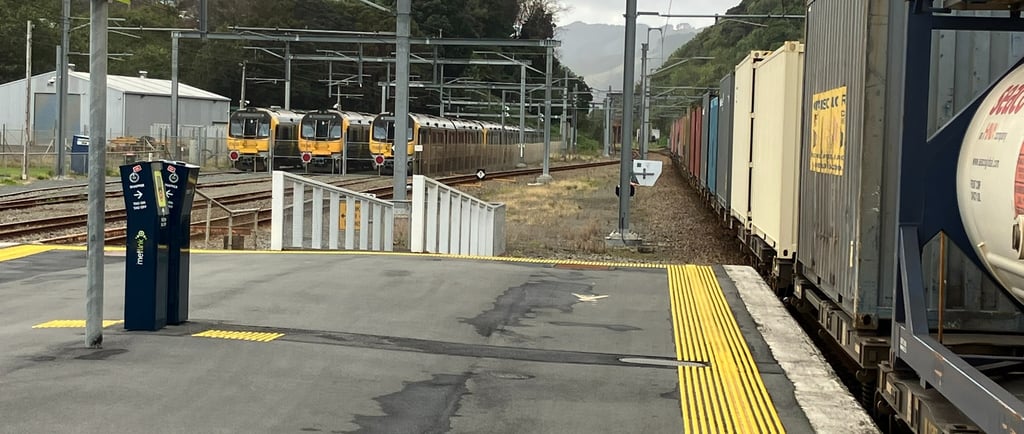
The Future is Rail commissioned study about Heavy Vehicle Subsidies provides analysis of how the trucking industry does not pay the costs it should, to enable New Zealand’s roads to be adequately maintained. In August 2025, The Future is Rail submitted our response to the draft Infrastructure Commission - Te Waihanga Infrastructure Plan.
An overview of the response is outlined here. The Future of Rail spoke of concerns about the costs of current and future roading projects, and how the next tranche of Roads of National Significance (RoNS) in particular were to be funded. Despite gung-ho promises they would be able to be funded through public private partnerships, and pricing mechanisms such as tolls, it has become clear that our concerns were real.
The updated Government Policy Statement 2024-2027 (GPS) on Transport provides an indication of the funding sources for roads, including a Crown grant (capital expenditure) for $3.1 billion and a loan of $3.1 billion. So therefore, it is acknowledged that a Crown top-up is needed, as revenue does not cover costs. Moreover, elsewhere in the GPS, it became clear that many of the “new” RoNS are unfunded.
The recent release of a heavily redacted Ministry of Transport (MOT) report provides enough information to make very clear the extent of the funding issues. Current estimates for the 17 projects exceed $56 billion, requiring an additional $49 billion in funding beyond current budgets. The report states that many projects have medium to low BCRs (0.7 to 3.1). It appears that some potentially qualify only due to manipulation and changes to the current calculation methods. Greater Auckland provided some great background analysis work late last year, before the updated extent of the costs became known.
A total cost of more than a quarter of a trillion dollars has been forecast for the 17 RoNS, a second Auckland harbour crossing and a Northwest Busway. It is clear that for even a portion of these projects to be delivered within a regime of politically acceptable tolls, increases in Road User Charges (RUC), fuel excise duties (FED), and motor vehicle licensing fees (MVR) a very substantial crown funding (i.e. subsidy) for the overall roading programme may be required.
It has been estimated that annual roading revenue may be substantially less than roading costs during construction, creating the need for the government to take on additional borrowing, either directly or through expensive financing via public-private partnerships. Based on experience with Transmission Gully and other roading projects, crown funding may also be required in future to enable the funding of a “huge uptick” in ongoing maintenance costs, over and above the construction costs.
Against, these sorts of numbers, funding for the Te Huia trial to continue, and funding for future improvements in brand new rolling stock and infrastructure, looks like an absolute bargain.
We explore these issues in more detail in our report Preventing another Te Huia extinction.