
The vision for Te Huia
The original vision for Te Huia was to become a permanent, expanded regional rail service connecting the Waikato and Auckland, potentially expanding to Tauranga, offering more frequent services (up to hourly), faster journeys, with CBD access (Hamilton Station), and integrating with Auckland’s City Rail Link, aiming for increased ridership, lower emissions, and greater economic benefits beyond its current trial period
POLICYWAIKATOCLIMATE CHANGEPUBLIC TRANSPORTBAY OF PLENTYREGIONAL RAILINVESTMENT
The Future is Rail
1/23/20263 min read


Te Huia support meeting in Hamilton
Wikipedia sets out the hard work and many struggles to get Te Huia up and running.This includes the hard work of Dave Macpherson who, at the time, was Hamilton City Council's Passenger Transport Committee chairman.
The Future is Rail reaffirms the original vision established at the commencement of the five-year Te Huia trial (2021–2026):
“to become a permanent, expanded regional rail service connecting the Waikato and Auckland, potentially expanding to Tauranga, offering more frequent services (up to hourly), faster journeys, with CBD access (Hamilton Station), and integrating with Auckland’s City Rail Link, aiming for increased ridership, lower emissions, and greater economic benefits beyond its current trial period ( 2021-2026)”.
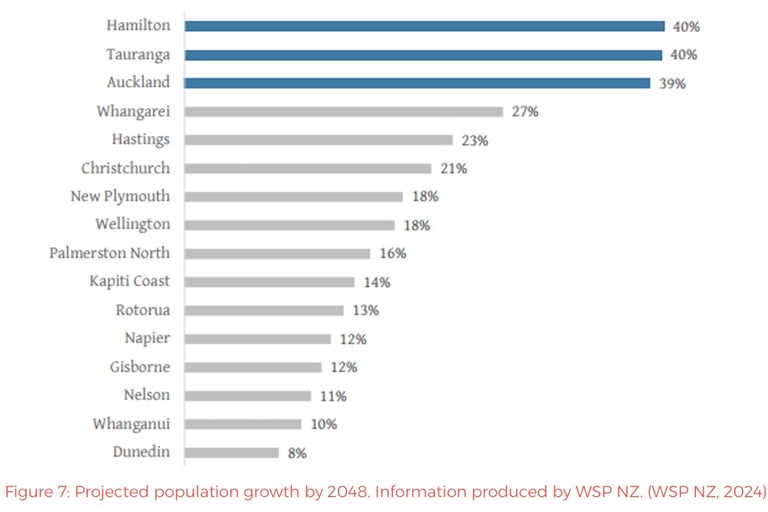
In essence the vision is to grow Te Huia from a trial into a core, integrated part of the region’s public transport system, boosting connectivity and sustainability between the Waikato and Auckland, then onto the Bay of Plenty. It recognises that the ‘Golden Triangle’, including Auckland, Hamilton, and Tauranga will increasingly be the economic engine of New Zealand with strong population growth projected.
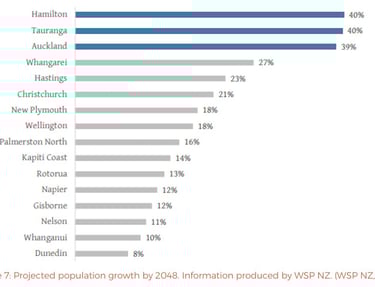
Population growth through to mid-century is illustrated in a study carried out on behalf of the Airports Association.
When considering the rail network in the Bay of Plenty, it should be noted that Whakatāne is another regional centre with great natural amenities but unrealised economic potential. Whakatāne has had ongoing issues with securing a regular air service. With KiwiRail’s scenic rail corridor east of Tauranga towards Kawerau in generally good condition, could a short branch-line from Awakeri to the retail precinct east of Whakatāne River, be a useful addition to Golden Triangle regional passenger rail?
Not all of those living in the Auckland, Waikato and Bay of Plenty regions will want to drive, or will be able to drive, when travelling around the region. A study, based on 2018 data, indicated that across New Zealand over 200,000 males aged 16 or older and nearly 300,000 females 16 and older did not hold a full licence. Over-represented in these groups are lower income people and Māori. If those under 16 are included, up to a third of New Zealanders may not hold a full licence. In addition, there are those who hold a licence but, for various reasons, are not able to, or should not, drive.
This includes older people whose numbers are increasing as the population ages. Statistics New Zealand population projects suggest the number of people aged 65 and older in the Golden Triangle will increase from an estimated 382,000 in 2023 to over 635,000 in 2043. More detailed projections suggest the number of people aged 80 or over could increase from 91,000 to 210,000 in the same period.
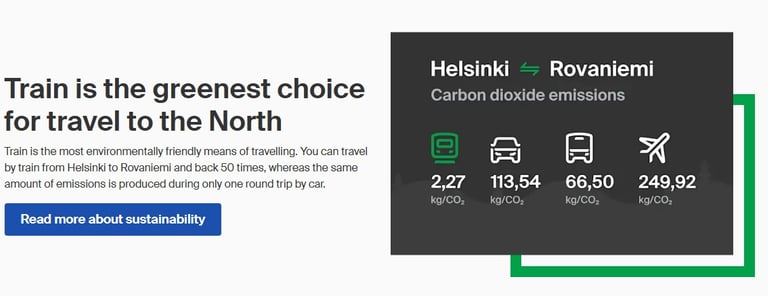
Rail passenger and rail freight connection, especially if fully electrified, will be essential to realise economic growth opportunities for New Zealand while also reducing transport emissions.

Enhanced connectivity will also support the equitable development of regional communities. Through enabling affordable access to education, jobs, new regional businesses, family, social events and health services, Te Huia and its successor regional passenger rail services, may play a role in encouraging more kiwis to stay in Aotearoa New Zealand.
We explore these issues in more detail in our report Preventing another Te Huia extinction.
Finland has lower per capita domestic transport emissions than New Zealand. One reason is train travel replacing flights and driving. Across that nation of just under 6 million people over 15 million people travelled by train in 2024, compared with about 360,000 in New Zealand.
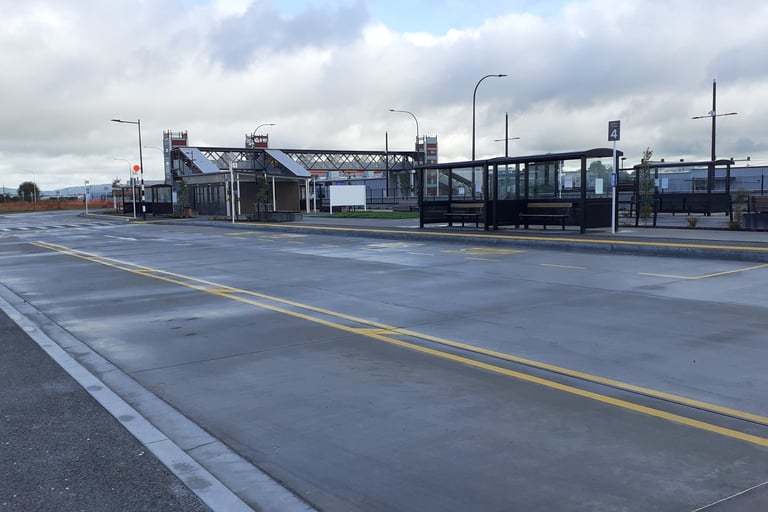
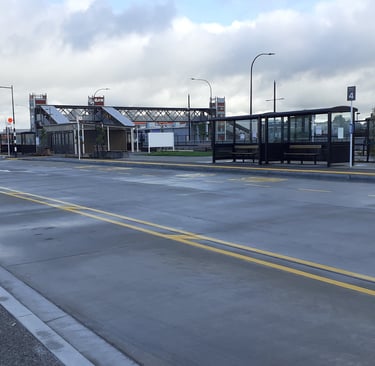
Rotokauri transport hub: Photo Chris McKellor