
Heavy electric trucks solve one problem while creating another
The Future is Rail supports electrification of all forms of transport, including trucks and increased electrification of our rail network. To increase the uptake of electric trucks, Drive Electric want to see weight and size limits lifted for electric trucks. But policies should not encourage even heavier trucks to be on our roads further increasing road damage, making roads less safe, while putting already low emission, energy efficient rail freight at a disadvantage.
POLICYRESILIENCECLIMATE CHANGEREDUCING OIL DEPENDENCYFREIGHTINFRASTRUCTUREINVESTMENT
Paul Callister
7/7/20264 min read
In early July 2026, Drive Electric has been consulting its members on an election strategy. Drive Electric’s mission is to actively work to accelerate electric vehicle uptake in New Zealand. Drive Electric has many members including energy companies, car companies, suppliers of EV chargers and retailers. KiwiRail, operator of some electric trains, is not a member.
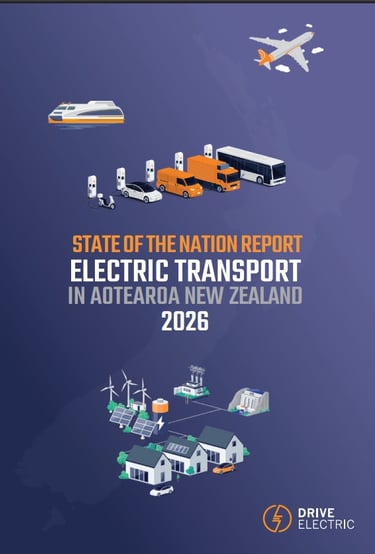
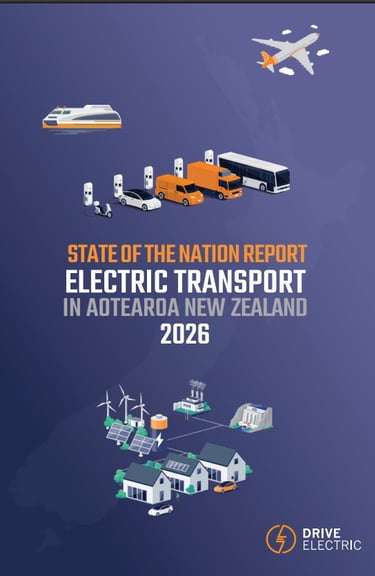
Earlier this year when Drive Electric published its State of the Nation report, it had just about every sort of electric vehicle on its cover. Even a large electric plane, despite no large commercial electric planes flying anywhere in the world. Missing were electric trains. The Future is Rail pointed this out and had a useful engagement with the head of their board.
Perhaps because electric trains have been operating for such a long time in New Zealand, and KiwiRail is not part of their organisation, electric trains are easily overlooked. Yet, electric trains have been operating in metro areas since 1938. Daily they carry tens of thousands of people in Auckland and Wellington.
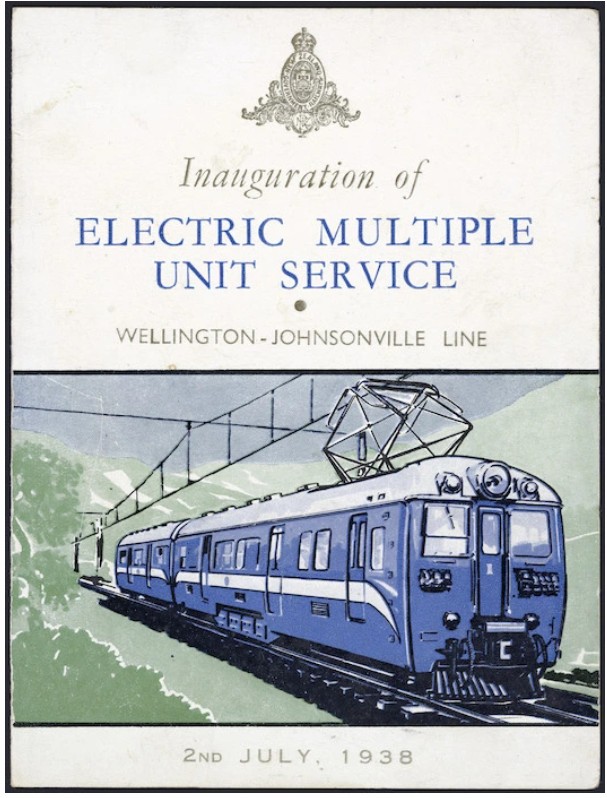
Since ‘Think Big’ we have also had electric trains operating through the central North Island.
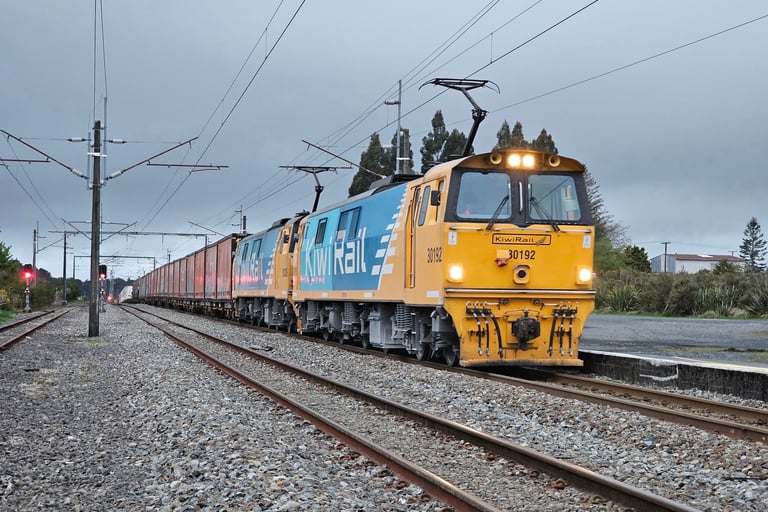
The Future is Rail supports electrification of all forms of transport, including further electrification of our rail network. But Drive Electric’s suggested policies around heavy trucks put us in direct conflict with them.
Drive Electric rightly points out that:
‘Heavy vehicles are just 4% of the fleet but contribute approximately 31% of transport emissions.
Like them, we want to drive down emissions. But we also have other goals. We want to make our roads safer for other users, reduce the cost of damage to our highways and create a level playing field with rail for the movement of freight.
In their draft manifesto recommendations Drive Electric want to see weight and size limits lifted for electric trucks. Specifically, they state they want the government to:
‘Provide permanent VDAM weight exemptions to ensure battery weight does not reduce freight payload for heavy EVs — and issue interim guidance immediately while the VDAM review and permanent legislation is progressed.’
VDAM (Vehicle Dimension and Mass), exemptions allow certain vehicles to operate above standard weight limits under specific conditions, such as for the so-called high productivity motor vehicles (HPMVs) that can exceed the 44-tonne limit with a permit. The Future is Rail has shown that the damage these trucks do to our roads is not covered by the truckers. It leads to big subsidies by taxpayers and puts rail freight at a disadvantage.
Operating vehicles under VDAM weight exemptions can also increase road safety risks such as brake failure or tire blowouts due to higher axle loads.
One of the other recommendations of Drive Electric is to:
‘Allow increased axle weights and length dimensions to provide regulatory certainty to OEMs and trailer manufacturers.’
Our research shows that at current road user charging rates, heavy trucks do not pay the full cost of damage to roads. But Drive Electric want these heavier trucks to pay no road user charges until their numbers build up.
‘Extend RUC exemptions for heavy EVs — including electric trailers — until 2032, or until they reach 2% of the heavy vehicle fleet, whichever comes first.’
Studies carried out by The Future is Rail demonstrated that the 2024 Government Policy Statement on Land Transport was an admission that revenue provided by users towards road maintenance had not kept up with costs.
This deficit of funding was acknowledged by then Transport Minister Simeon Brown, when he announced a $1.6 billion boost for pothole prevention in June 2024.
While weather resilience and climate change are certainly factors, The Future is Rail found that heavy trucks were being subsidised, and would receive a direct annual subsidy of $1.4 billion dollars per annum by 2027, mostly attributable to maintenance costs.
These issues have been further explored by The Future is Rail in reports; here and here. The most recent study specifically touches upon some of the issues raised by the subsidisation of electric trucks, by allowing them to operate on roads, that were not designed for higher axle loads, where there is an expectation that government and local councils will pick up the tab for the additional damage done to the roads.
It appears that some electric truck advocates are asking for the same playbook to be used, as was the case with High Performance Motor Vehicles (HPMVS) more than a decade ago. That is; talk up the benefits to freight customers, through enhanced truck operator productivity enabling lower freight rates, but with the consequential additional roading costs transferred to the state and local councils.
The Future of Rail wants to see all modes of transport electrified. This includes trucks. But there are better ways to encourage this electrification than effectively subsiding them. For example, a much higher price for carbon. But policies should not encourage even heavier trucks to be on our roads further putting low emission, energy efficient rail freight at a disadvantage.
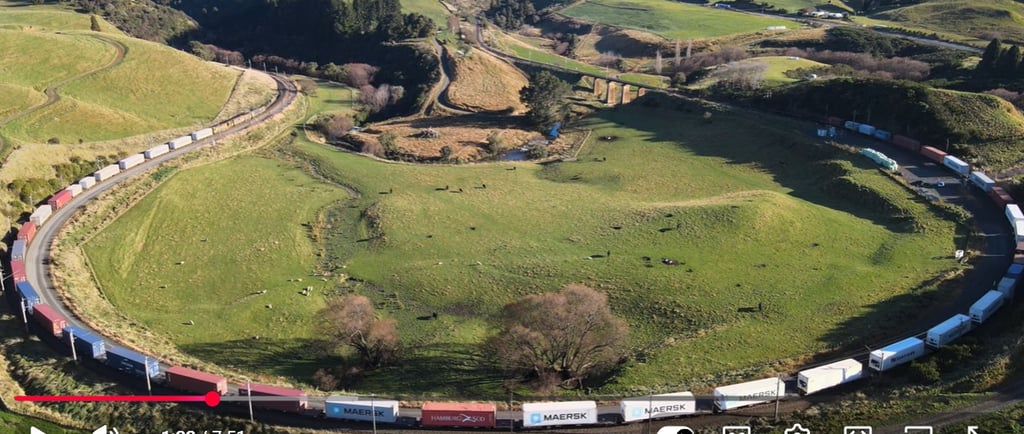
As an example of just how price sensitive the freight market is, traffic has increased considerably over the last few months on the Taranaki and Hawkes Bay rail corridors. This has been at least partially due to the oil price increases, which has encouraged the transfer of freight from road to rail. However, traffic on these rail corridors remain vulnerable to lower charges priced by truck operators, if they get given a competitive advantage, for example heavier trucks (higher payload or lower cost electric power relative to diesel), operating on roads, whose increased maintenance costs are carried by the state, not the operator.
The Future is Rail and Drive Electric ultimately have the same goal of decarbonising transport and reducing dependency on imported fossil fuels. The Future is Rail urges Drive Electric to drop its push for harmful regulations; society needs decarbonisation to be done safely and fairly.