
The Kaimai Express reborn again: The future of Tauranga rail
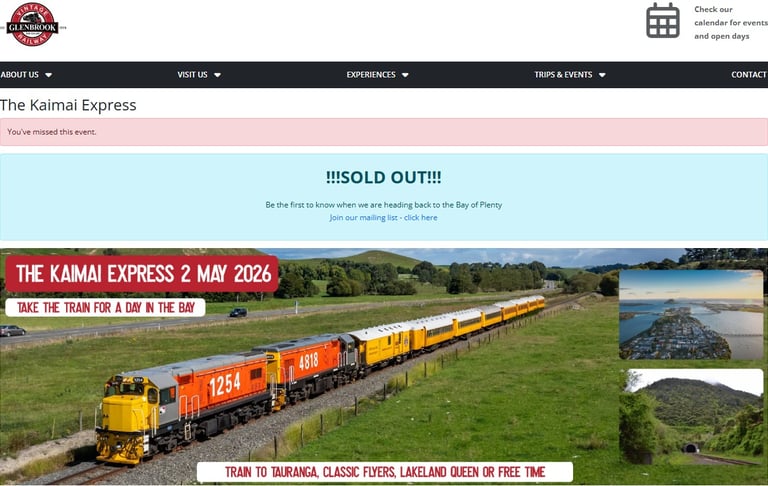
Along with over 900 people, on Saturday May 2nd 2026 Future is Rail supporters travelled from Tāmaki Makaurau/Auckland and Kirikiriroa/Hamilton to Tauranga, or on a local excursion, by train. When the Glenbrook Vintage Rail trip was announced, it sold out in less than 2 days. There is much positive news nationally in relation to rail. With the City Rail Link in Auckland soon to open, new trains coming to replace the Capital Connection along with infrastructure upgrades and Mainland Rail in the South Island running new services, there is momentum. The current fuel crisis, with the need to reduce oil use for both climate and energy self-sufficiency reasons, plus reductions in regional air services make bringing back trains a no-brainer. The Future is Rail is optimistic that we will eventually see the return of regular Kaimai Express trains.
WAIKATOPOLICYEVENTSPUBLIC TRANSPORTBAY OF PLENTYREDUCING OIL DEPENDENCYREGIONAL RAILTHE FUTUREREGIONAL PLANSINVESTMENT
Paul Callister
5/24/20269 min read
My post content
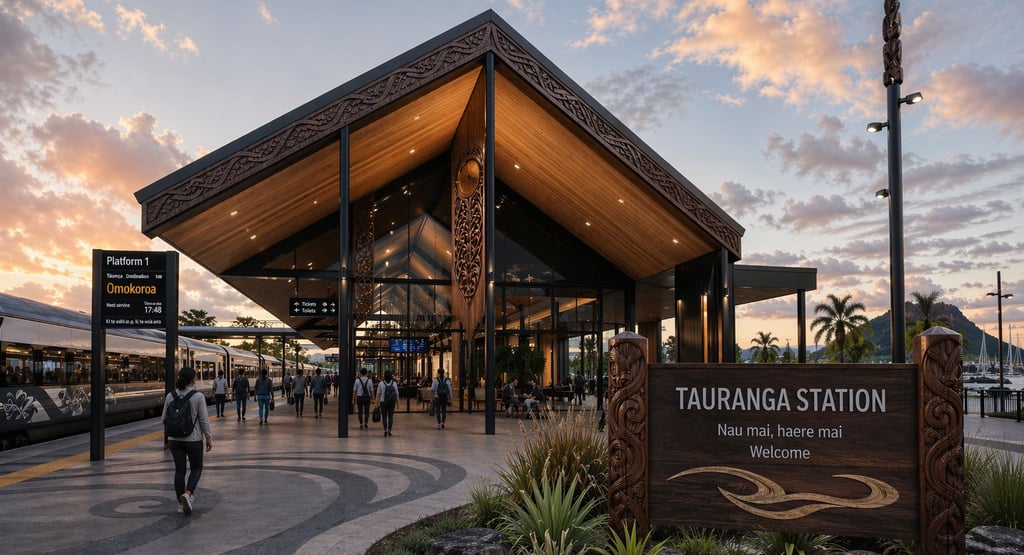
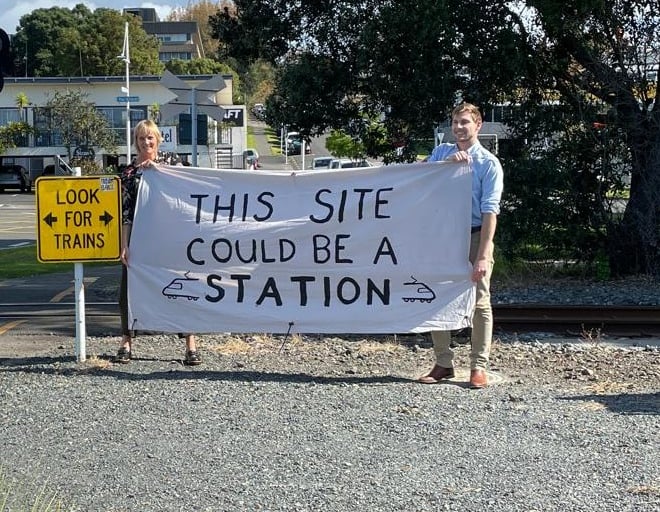
Source: Kelvin Eagleton Tauranga Rail.
Along with over 900 people, on Saturday May 2nd 2026 Future is Rail supporters travelled from Tāmaki Makaurau/Auckland and Kirikiriroa/Hamilton to Tauranga, or on a local excursion, by train. When the Glenbrook Vintage Rail trip was announced, it sold out in less than 2 days. This was a hugely positive response from the public.
During and after the trip there was widespread, and enthusiastic, coverage on social media and through mainstream journalism. These include Hayden Donnell’s article in The Spinoff A train trip back in time to before we screwed up our transport system and Lloyd Burr’s Stuff video and article Passenger train to Tauranga? We put it to the test.
Tauranga City Council, downtown Tauranga and tourism BOP were really supportive. The rail trip also attracted current and potential politicians from across the political spectrum. Current National Party MP for Tauranga, Sam Uffindell, posted about a great day out with his children. Labour list MP Georgie Dansey also posted great video footage as did Green Party candidate Louise Hutt and Waikato Regional Councillor Angela Strange. TOP’s Michael Carter was also there supporting the trip.
This is encouraging as we need cross party and local authority support in order to revive regional rail.
Professor Ian White was on the train and, taking a wide perspective, wrote on Linkedin:
“On Saturday I was lucky enough to be a passenger on the Kaimai Express, experiencing the kind of rail travel we used to have with a one-off trip between Hamilton and Tauranga. For overseas viewers trying to work out why this is noteworthy, it was special as it was the first trip by passenger rail between NZ's 4th and 5th biggest city in 14 years.
It was fun and a novelty, but should it be? It’s a misconception to consider rail investment as being about transport, when it can have such a big influence on land value, housing, productivity and economic growth. Over 50% of NZ's population, jobs and GDP are in the Golden Triangle of Auckland, Hamilton and Tauranga, and improving connectivity between these high-growth cities could be the cornerstone of long-term national planning.
I do wonder with the election coming up, the lag in economic productivity and infrastructure deficit, and the rise in fuel costs, etc, whether rail could become an election issue. It’s not something that can be fixed overnight, but if we are to plan for a prosperous country of 8-10 million, we need to start thinking about growth in a way that better links population, planning, housing and infrastructure investment.”
Source: Heidi Hughes
This was an historic event.
The first regular passenger service linking Tauranga to the main north island trunk line had started back in 1928. Passenger rail to Tauranga was discontinued in 1967 when the rail cars were taken off. It was reestablished in 1991 as the Kaimai Express. Services ran through to 2001 when the Kaimai Express was stopped through lack of support by the then Labour government.
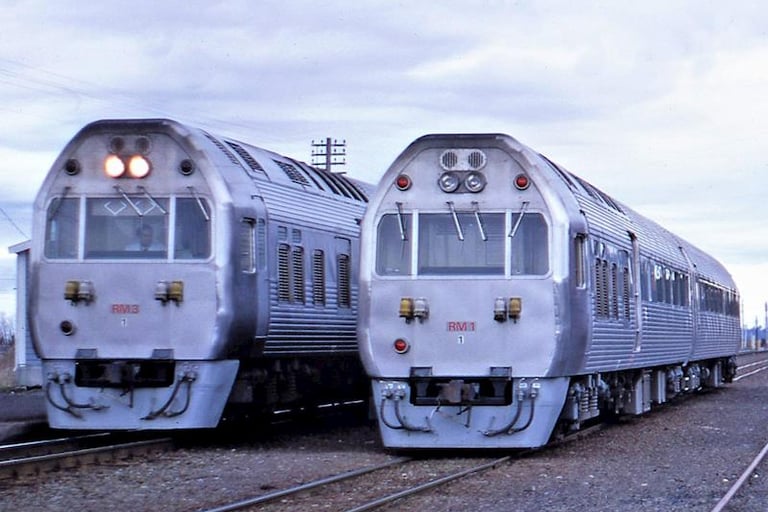
Source: The Silver Fern railcars that were the last trains used to run the regular Kaimai Express, now owned by Pahiatua Railcar Society https://railcars.co.nz/
Past advocacy
Since then, there have been no regular scheduled passenger trains to Tauranga and the wider Bay of Plenty. However, many groups and individuals have been lobbying for a return of passenger trains. This includes Greater Auckland, the ideas offered by Ben Ross and Susan Trodden, and, of course, the work by The Future is Rail. Now, locally, there are groups and individuals promoting the establishment of metro rail within Tauranga.
It was back in 2017 that Greater Auckland set out their concept of Regional Rapid Rail linking Auckland, Hamilton and Tauranga.
The specific objectives of the 2017 GA Regional Rapid Rail plan were to:
Connect major employment and population centres, including central business districts, growing metropolitan areas, employment areas and satellite towns in the Upper North Island.
Deliver a fast and competitive rail service with a target travel time of 90 minutes from Hamilton to Auckland and under 2 ½ hours from Tauranga to Auckland. The emphasis is on quality of time and maintaining consistent and reliable speeds.
Provide a regular and frequent rail service, scheduled to suit a range of travel times and trip purposes, serving commuters, tourists, students and residents alike.
Make complementary improvements to the rail freight network. All upgrades should, at the least, not disturb KiwiRail’s ability to move freight now or in the future. Passenger rail network upgrades should also seek complementary improvements that also enhance the efficiency and capacity of the Kiwirail rail freight network.
Assist the creation of affordable housing supply that is well connected by congestion-free transit. Use transit focused residential development to catalyse the local economies of northern Waikato towns, which face potential economic decline by being bypassed by the new Waikato Expressway.
Link regional transportation to well-planned communities with good urban outcomes. This should not just be a rapid train network but the means to create vibrant, livable towns and cities that are economically and socially sustainable.
Integrate directly with local public transport, walking and cycling networks, such as the Congestion Free Network 2.0, to maximise coverage and usefulness.
Deliver environmental benefits by limiting the growth of long-range traffic and reducing pollution and CO2 emissions, assisting New Zealand to meet its commitments under the Paris Agreement.
Reduce road traffic injury and deaths, to assist New Zealand in reaching Vision Zero.
Ensure value for money for taxpayer investment by optimising investment in infrastructure where it is most effective, regardless of mode.
These all remain worthy objectives.
Making Rail Work campaigned for reviving passenger rail services to Tauranga and although their group is no longer active they developed a great website.
In a March 2022 article in the Logistics Transport magazine, passenger rail, freight and public transport consultant Michael van Drogenbroek discussed bringing passenger trains back to Tauranga as part of a New Zealand wide National Passenger Rail strategy.
Another strong advocate for passenger rail to Tauranga has been Ben Ross. He states that we:
“…are not looking for Japan Bullet Train style services of 320km/h but more to the 160km/h services that run between Japanese cities as standard, and the TILT train in Queensland. The reason 160km/h is that both the TILT Train, and Japan standard intercity services run on the same narrow gauge of 1,067mm as rail does in New Zealand. No expensive laying down of broad-gauge rail tracks for high-speed rail, but can bring our existing narrow-gauge rail up to speed – as it were.”
One of Ben’s key ideas is to bring in the Japanese to make the train to Tauranga a reality:
“Japan are world renowned for their rail systems (most are privately owned), their reliability, punctuality, and their rather large transit-oriented developments in, around, above and below their stations as well. We should bring in the masters for Auckland-Hamilton-Tauranga inter-city services due to high population growth allowing guaranteed patronage if you provide a decent enough rail offering.”
Ben sets out quite detailed estimates of costs of setting up a service, noting that they are a bargain compared with Roads of National Significance.
In 2025 The Green Party called on the Government to extend the Auckland-Hamilton passenger rail network to Tauranga.
While The Future Is Rail advocates for a return of passenger rail to much of Aotearoa New Zealand, the trip from Auckland, through Hamilton, to Tauranga is one of our main priorities. Lindsey Horne, From The Future is Rail, and Heidi Hughes, known for many transport campaigns including Wednesday Challenge, were the key drivers behind the successful excursion. Glenbrook Vintage Railway worked hard to get the excursion approved by KiwiRail and NZTA and were great hosts on the day.
How to bring back a regular passenger train service
So how do we move from a one-off excursion using vintage carriages and diesel locomotives to modern, frequent, affordable trains powered by renewable electricity?
Luckily, we are already halfway there. Te Huia runs daily between Auckland and Hamilton. Despite some early challenges, the train is reaching its patronage, emission and farebox targets. . Now it has to head out of Hamilton to continue onto Tauranga.
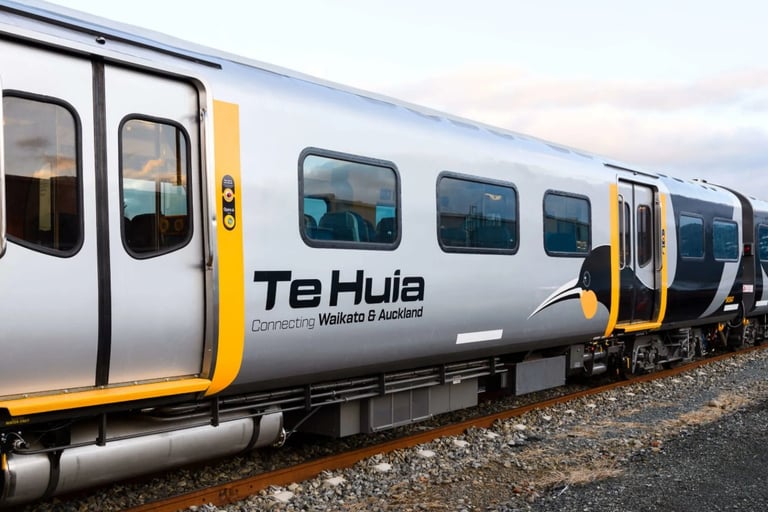
The line from Auckland to Tauranga is our busiest. But all the trains currently running through to the port of Tauranga are diesel powered freight trains. Getting slots for passenger trains is challenging for a number of reasons. A key issue is the Kaimai tunnel. Without good ventilation systems, passenger trains need an hour gap after a diesel freight train goes through the tunnel.
Electrification solves that problem. Darren Davis provided an update on electrification moves in late 2025. Electrification options are primarily overhead lines for the whole journey or hybrid trains using overhead electricity when available and switching to a battery where external power sources are not available. Many groups in New Zealand promote electrification as a way of reducing dependency on imported fossil fuels while reducing emissions including Rewiring Aotearoa. Their motto is “Electrify Everything”.
Overall, only about 13% of New Zealand’s rail network is currently electrified and it makes sense to focus on our busiest lines first. So, the Tauranga line is a prime candidate for electrification.
Then there is the need to source trainsets for the journey. It makes sense to piggyback on the order for new Capital Connection trains. These are being designed as hybrid trains running partly on battery.
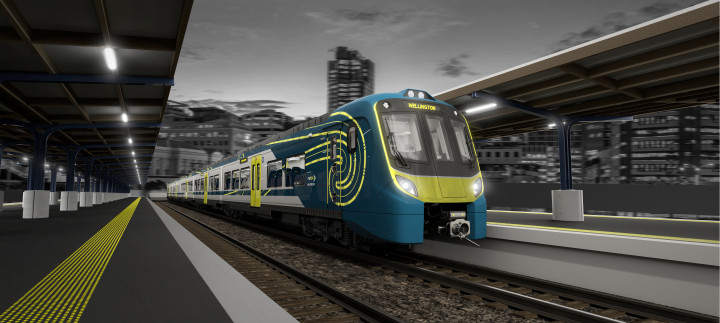
Source: Greater Wellington Regional Council
But potentially there are other short to medium term options. If the tunnel ventilation challenge can be solved when the new Lower North Island trains arrive then the current Capital Connection and the Wairarapa trains could be repurposed.
So where would the regional train stop in the Bay of Plenty? There is an argument that it would terminate at Papamoa or even go as far as Te Puke. There would be a station at Ōmokoroa and central Tauranga too on the Strand. In the short term these could operate using temporary platforms.
Local trains
To add to the momentum of bringing back the Auckland, Hamilton to Tauranga service two Tauranga locals are promoting the idea of metro trains.
In separate campaigns Kelvin Eagleton and Mark Wassung are promoting running trains along the railway lines already traversing the wider Tauranga urban area. Kelvin has started a Linkedin page called Tauranga Rail. He states:
“Imagine relaxing on a train instead of driving a car and sitting in queues of traffic. The benefits could be huge for the Tauranga and Western Bay of Plenty region:
• Less traffic congestion on key routes like Hewletts Road, Cameron Road, SH29A and SH2
• More relaxing daily travel — read, work, listen to music, or simply enjoy the view
• Safer roads with fewer cars and less pressure during peak times
• Better access to places like Bay Oval, Blake Park, Baypark, schools, shopping centres and the CBD
• Faster and more reliable travel during busy periods
• Reduced fuel costs and less wear on personal vehicles
• Lower emissions and cleaner air for the region
• More independence for teenagers, students, elderly people and those unable to drive
• Stronger connections between communities such as Ōmokoroa, Tauranga, Mount Maunganui, Papamoa and Te Puke
• Opportunity for more walkable, vibrant town centres around stations
• Tourism benefits, giving visitors an easy way to explore the region without needing a car.”

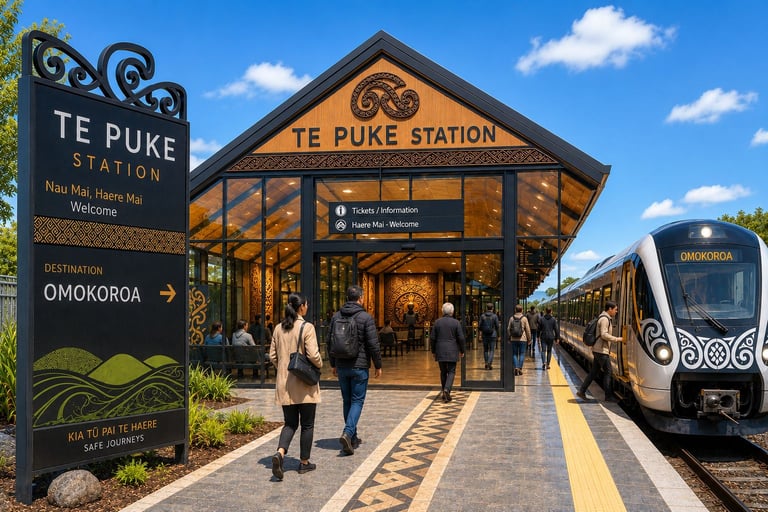
Source: Kelvin Eagleton Tauranga Rail.
The Future is Rail
There is much positive news nationally in relation to rail. With the City Rail Link in Auckland soon to open, new trains coming to replace the Capital Connection along with infrastructure upgrades and Mainland Rail in the South Island running new services, there is momentum. The current fuel crisis, with the need to reduce oil use for both climate and energy self-sufficiency reasons, plus reductions in regional air services make bringing back trains a no-brainer. It makes the most sense of all to have rail in the Golden Triangle.
In a recent Linkedin post, rail consultant Michael van Drogenbroek is optimistic about the future of rail to Tauranga.
“There is much to sort out to bring this vision to reality including resolving rail operational challenges, funding, political consensus, community agreement - but Rome wasn’t built in a day as the saying goes - so I truly believe now it’s just a matter of time.”
Michael suggests that Auckland to Tauranga passenger trains every two hours should eventually be possible. In countries such as Finland, cities of a similar size to Auckland, Hamilton and Tauranga have hourly trains running for much of the day.
Like Michael, The Future is Rail is optimistic that we will eventually see the return of regular Kaimai Express trains.