
Transit oriented development: A new Levin railway station as a key to urban revitalisation
Levin needs a new, modern station in the town centre, ready for when the new modern hybrid electric trains, linking Palmerston North and Wellington, arrive. A new station would provide a perfect example of supporting transit oriented development and help revitalise the town centre.
POLICYPUBLIC TRANSPORTPLANNINGREGIONAL RAILINFRASTRUCTURECONNECTIONREGIONAL PLANSINVESTMENT
Paul Callister
6/29/20266 min read
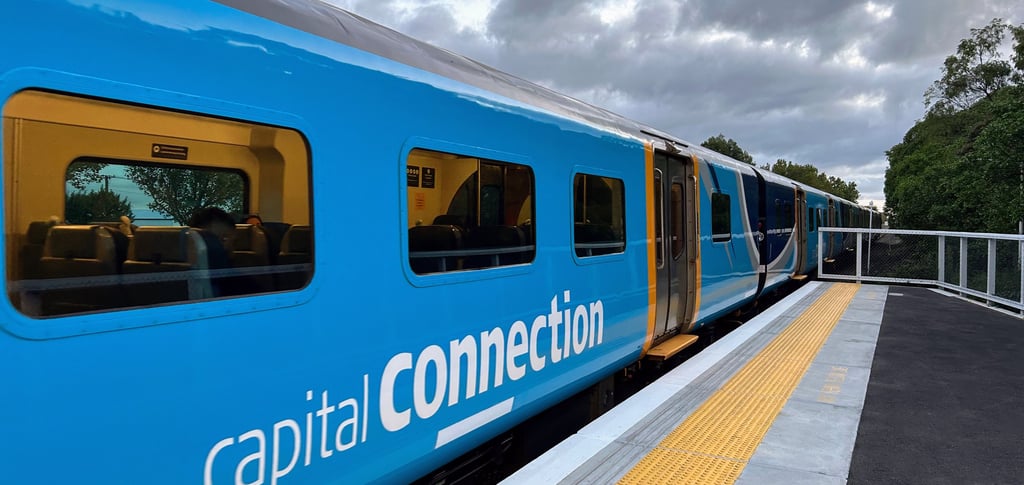
The current Capital Connection. Soon to be replaced by new modern trains.
Levin is one of the towns up the Kapiti and Horowhenua coasts originally built around a railway line. It is named after a director of the Wellington and Manawatu Railway Company, William Levin. These settlements were early examples of transit-oriented developments. Trains brought goods and passengers to and from the settlement. But slowly the town spread out into the nearby countryside and regional roads were developed.
With the collapse of regional passenger rail, only one passenger train now stops in Levin. The Capital Connection comes through in the morning from Palmerston North, returning in the evening on weekdays. It doesn’t run during weekends or public holidays.
New modern hybrid electric trains are coming before the end of the decade linking Palmerston North and Wellington. These services will be more frequent than the current Capital Connection. But how weird that they will potentially stop at a dilapidated railway station located in the wrong part of town! Imagine a rundown airport in the wrong part of town. This just wouldn’t happen.
Should a new railway station and transport hub be the centre of a revitalised downtown Levin? Planners think so. The Future is Rail think so. The new trains, and eventually other regional trains heading to New Plymouth and Napier, perhaps a night train to Auckland, could stop at a new, centrally located transport hub next to a revitalised town centre with civic amenities, shops, housing and hospitality outlets.
But how come there is no money to undertake this project when billions are being spent on the Otaki to Levin expressway extension?
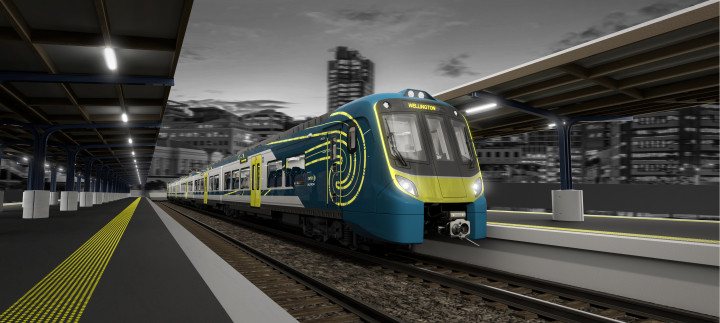
A mock up of the new trains. Source: Greater Wellington Regional Council
Internationally, there is interest in the concept of transit-oriented developments. We have explored this using Australian examples, in one of our Future is Rail blogs.
This blog also mentioned research by Thomas Nash, published under the title Station Cities: UK lessons for building cities around public transport.
Nash argues that most new housing in New Zealand is still being built far from train and bus corridors. Levin is a classic example with houses now spreading out onto prime horticultural land round the town’s edges, leaving well-connected land underused and public infrastructure delivering only a fraction of its potential return.
Nash’s main recommendations are for government to:
1. decide to do transit-oriented development at a national level and fund the public transport and enabling infrastructure properly;
2. designate key station precincts for development and look at planning and fiscal mechanisms to make development more attractive;
3. facilitate dedicated delivery entities with powers to assemble the land around station precincts and manage development; and
4. sort out how to ensure the public benefits fairly from the increase in land values that public investments generate.
In the lower North Island, Nash’s report only focuses on the Wellington region through to Porirua. But should this thinking apply further along the main trunk line?
2023 census data show Horowhenua has been the tenth fastest growing district in New Zealand. In recent times, the population has grown by about 600 people yearly. Levin is predicted to rapidly grow over the next few decades. In 2023, there were 36,693 residents, with suggestions that the population could increase to over 54,000 by 2044 and over 66,000 by 2054. If it does reach this size, this is as big as Napier or Porirua is today.
Levin is already bigger than Masterton.
During the week there are five trains from Masterton to Wellington and two on the weekends. Masterton also has three stations within its urban area.
Many of the towns along the railway line from Wellington to Levin already have some version of transit-oriented developments. Porirua, Mana, Plimmerton, Paekakariki, Paraparaumu, Waikanae, and Otaki have their stations near to shops, cafes and, in some places, supermarkets. Medium to high density housing is starting to be built near some of these stations. Paraparaumu station has just been upgraded as a transport hub with local buses and long-distance coaches also leaving from the centre. Nearby (to the right of the photo of Paraparaumu station) is a new high density housing development.
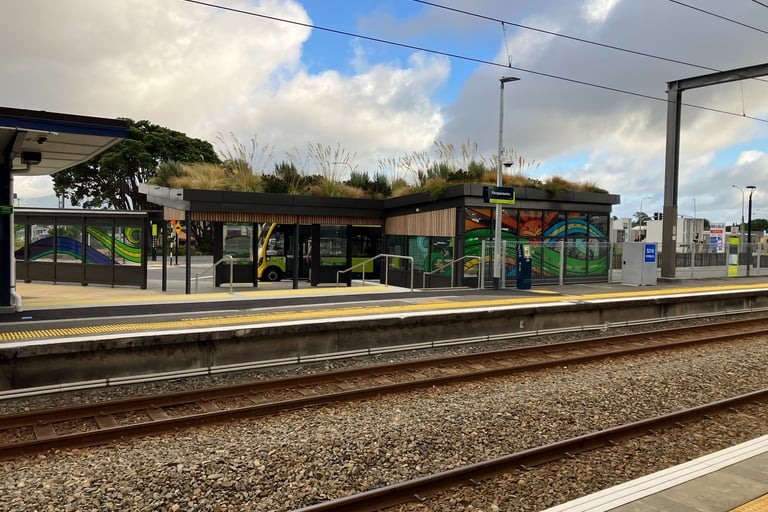
Levin’s current station stands out for its remoteness from the town centre.
So how could transit oriented development work in Levin? Current plans are for most new housing to be on the edge of town on prime horticultural land, nearer to the new expressway rather than the railway line. But housing could also be developed closer to the centre of town.
The Horowhenua District Council has a town centre transformation project underway. Their project website states:
“The Levin Town Centre transformation looks to design and create an attractive and vibrant urban town centre environment that supports economic growth, fosters community engagement and promotes sustainable development, ultimately enriching the quality of life for residents and visitors in Levin.”
As part of this vision, there is the Levin War Memorial Hall development, Levin domain redevelopment, Thompson House Gardens upgrade, and some high-density housing near the centre of town.
If the main station was in the midst of the redevelopment this would be an example of a transit oriented development.
“As Levin grows, so too does the need for better public transport connections. Work is underway to deliver improvements to Levin’s existing train station, alongside exploring opportunities to better use surrounding space to support future rail and bus services, improve how people move around town, and make it easier to connect with the wider region.
This work is supported through the Lower North Island Rail Integrated Mobility (LNIRIM) programme and aligns with the wider Levin Town Centre Transformation, which aims to make Levin safer, more connected and better prepared for future growth. “
It goes on to say:
“Council is working with KiwiRail, Horizons Regional Council, Greater Wellington Regional Council and Waka Kotahi NZ Transport Agency as part of the LNIRIM programme to help shape the detailed design for the Levin train station upgrades. Alongside the core LNIRIM-funded works, Council is also exploring opportunities to enhance how the surrounding space could be used over time to support better transport connections. This includes considering how the area might better support future park-and-ride use, improve connections with local bus services, and strengthen links for people walking and cycling to and from the station, including potential space for bus pick-up and drop-off.”
But after discussing all these possibilities the report notes:
‘While longer-term aspirations include the idea of a centrally located transport hub, consideration of relocating the train station is not being progressed at this time due to cost pressures. No decisions have been made about additional design elements, scope, timing or funding beyond the LNIRIM-funded station upgrades. Any further improvements would be subject to additional funding, technical assessment, partner discussions and future Council decisions.”
This is very problematic. The main station is in the wrong part of town, well away from the main housing areas, near petrol stations and other commercial buildings, and not an easy walk into the centre of town.
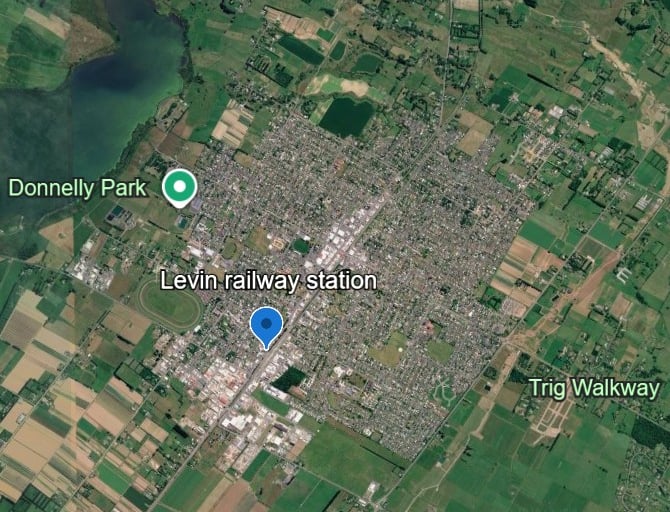
The current station is very dilapidated.
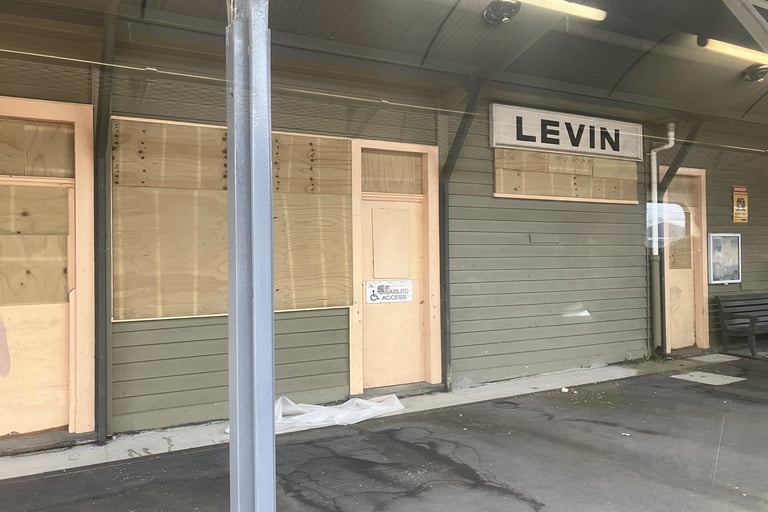
It is not worth upgrading this station!
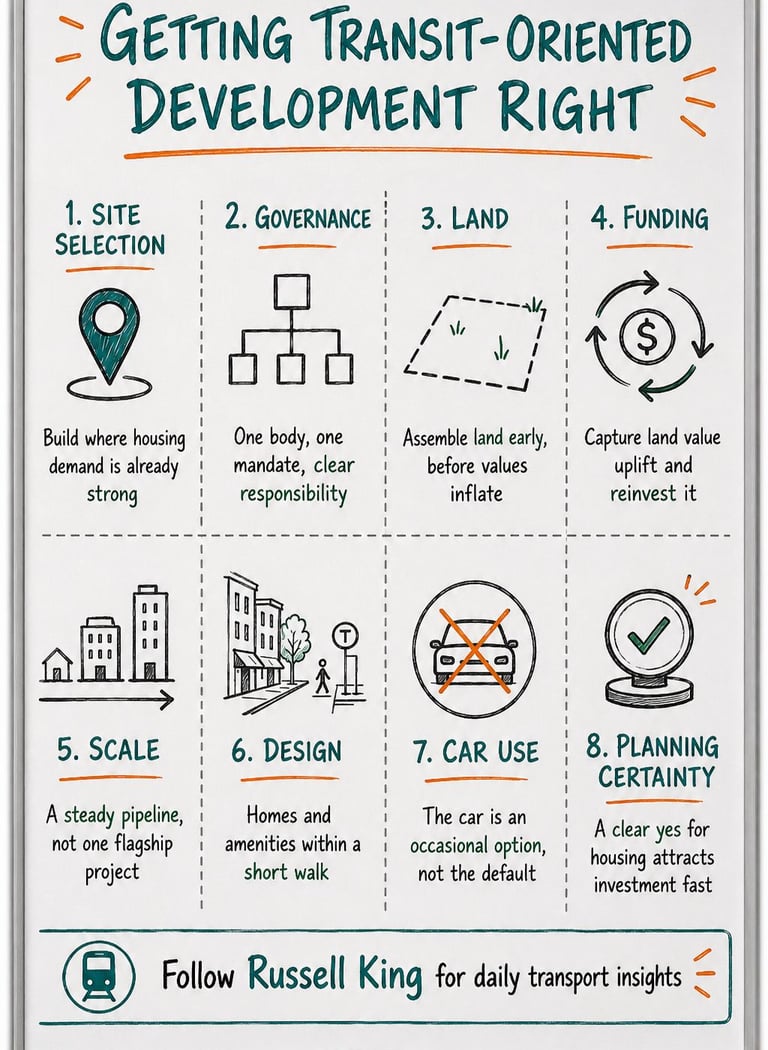
Transport planner Russell King sets out a number of requirements to make transit-oriented development succeed. Almost none of these are in place in Levin.
It seems money can easily be found for motorways. But there is none put aside for creating a new station and transport hub in the centre of town.
How to solve this issue is complicated in the current local government environment. Soon Horowhenua District Council may not exist. Nor might Horizons Regional Council or Greater Wellington Regional Council. It is not clear who will be responsible for running public transport, including the Capital Connection, and providing infrastructure. Two of the many ideas being discussed are a CCO and a Lower North Island Transport Authority. Whatever structure is chosen, it needs to support transit-oriented developments.
Levin needs a new, modern station in the town centre, ready for when the new trains arrive. This would be a huge step towards a rejuvenated Levin!