
Bringing back the Southerner
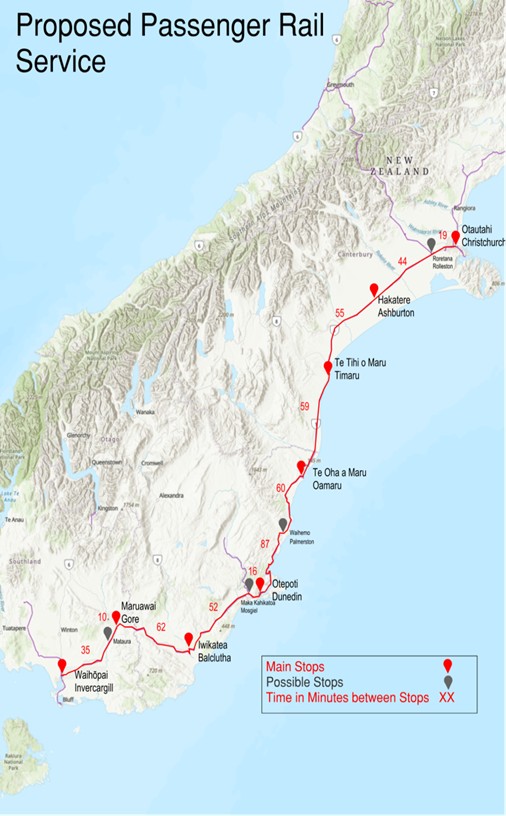
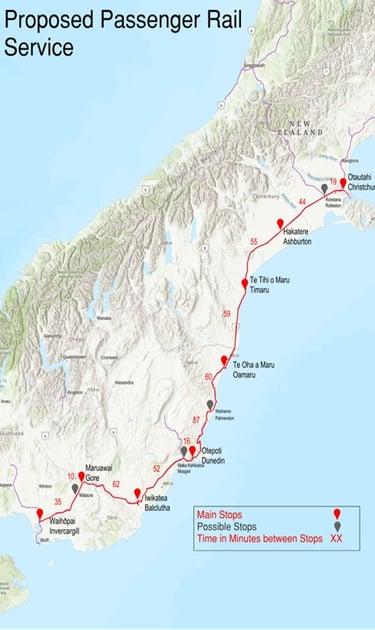
As we have left one golden age of rail far behind, we are about to enter another. The stars are lining up to support a revival of passenger rail in the South Island with a modern Southerner linking Christchurch, Dunedin and Invercargill
POLICYCLIMATE CHANGERESILIENCEPUBLIC TRANSPORTREGIONAL RAILSOUTH ISLANDINFRASTRUCTUREINVESTMENT
Paul Callister
12/16/20253 min read
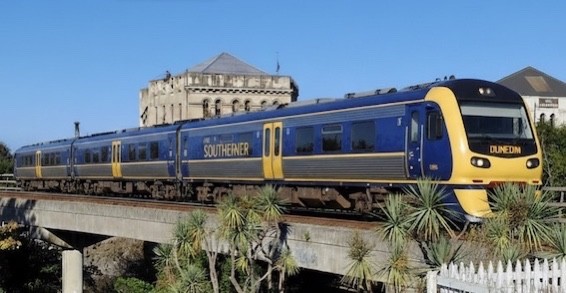
I travelled on the last scheduled railcar from Christchurch to Dunedin. It was not planned that way. It was simply that I regularly used trains to travel around New Zealand and it happened to be the railcar’s last trip. As a child, and in my early 20s, it was possible to reach most major towns and cities across New Zealand by affordable and frequent rail services. If a train was not available, there was always a New Zealand Railways coach or perhaps a Newman’s bus.
But sadly, no more. While the Southerner operated through to 2002, there has been no scheduled passenger rail services between Christchurch and Invercargill for nearly a quarter of a century.
However, as we have left one golden age of rail far behind, we are about to enter another. The stars are lining up to support a revival of passenger rail in Aotearoa New Zealand, including in the South Island.
The deep south chapter of The Future is Rail has been working hard to bring back the Southerner service linking Christchurch, Dunedin and Invercargill. But it will not be like the trains of old. This would be based on modern trains, potentially an extension of the purchase order for trains to replace the Capital Connection and those on the Wairarapa line. These state-of-the-art trains are more comfortable, are more fuel efficient, are better designed for those with disabilities than the trains of the past and, with fast wifi, can now be a mobile office.
In a time when we need to rapidly and dramatically reduce transport emissions, it will not be electric planes and flying taxis that are coming to save us. Instead, the known and well proven technology of long-distance passenger trains provides the perfect low emission travel answer. When, in a progressively unstable world, we need to increase fuel security, trains also fit the bill.
But these are not the main benefits of bringing back passenger rail. Reviving passenger rail would provide greater mobility options for a wide range of people living along the rail corridor as well as visitors from other parts of New Zealand or overseas.
The groups who would use the Southerner include:
Businesspeople
· Who wish to work while travelling
· Who would avoid the difficulties of accessing and using airports
· Who do business in smaller centres where air travel either does not exist or is so infrequent and costly as to be irrelevant
· Who may wish to reduce company carbon emissions liabilities
Students
· Over 2,000 tertiary students studying in Dunedin come from Canterbury and Southland centres on the Main South Line
· A significant number of Christchurch tertiary students come from Otago and Southland
· Secondary students, attending schools in other centres
· School sports teams, attending sports events
· Whose travel options to visit family, or vice versa, are limited by the expense of air travel and car travel, and safety issues relating to the latter.
Those with disabilities
· Who may not have access to a car
· Who have significant difficulty using aircraft
· Who are unable to use intercity coaches due to lack of accessibility
Retirees
· Who have many of the same issues as those applying to disabled people
· Who may not have ownership or access to a car, or relevant licenses as they age
· Who prefer a predictable, reliable comfortable and affordable form of transport
Residents of rural and regional communities
· Who have no air services, and limited coach services
· Who find it unsafe driving long distances.
Low-income earners
· For whom travel by aircraft is too expensive
· Who cannot afford long-distance car travel
As part of the campaign to bring back the Southerner there has been a well-supported petition presented to Parliament in July 2025. The planned hearing of the group’s submission by Parliament’s Transport and Infrastructure Select Committee will take place early next year.
Then, in December 2025, a proposal for the revived Southerner service was submitted to Te Waihanga, the New Zealand Infrastructure Commission’s Infrastructure Priorities Programme.
For those interested in learning more about our proposal the submission is on our website.